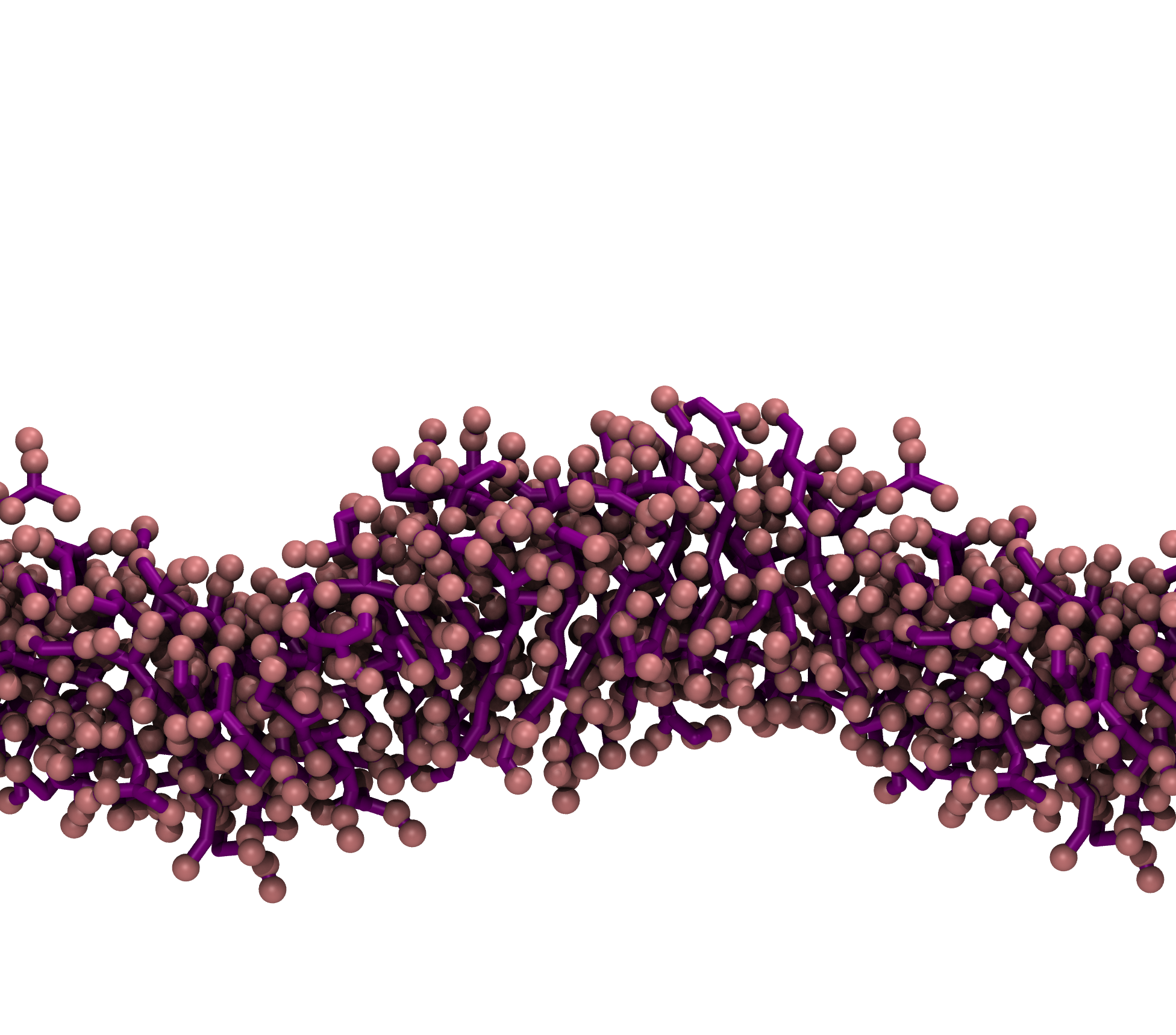
Apart from the physical models that are used to perform simulations, we also develop data-driven methods to gain information about self-assembly and amyloid formation of peptides in solution. Oftentimes, computer simulations, such as molecular dynamics, can produce vast amounts of data that is difficult to analyze. Especially with processes that are rare events (non-equilibrium) or that happen on short time scales, clustering and data dimensionality reduction methods have recently been proved to be useful for understanding the dynamics of a supramolecular polymers. Furthermore, while machine learning and data-driven methods continue to gain interest in the field of computational chemistry, it is an ongoing challenge to make connections between the outputs of “black box” machine learning models and physical and chemical processes. This project is therefore aimed at developing machine learning models that would ultimately be tied back to physical quantities we can measure, evaluate and apply to different problems.
Different initial peptide concentrations will be tested in order to study the effect of peptide concentration on aggregation behavior. We will also analyze the mechanisms of aggregation, nucleation events, mechanisms of amyloid formation and how it can be enhanced or prevented.
For example, the peptides in the simulation below, are specifically designed to self-assemble into nanofibrils. The nanofibril formation is observed in our simulations in agreement with experiments.
On the other hand, some of the peptide sequences do not form nanofibrils; we observe spherical aggregates in our simulations. These peptides are not bioactive.
Simulation videos courtesy of Serra Yıldırım