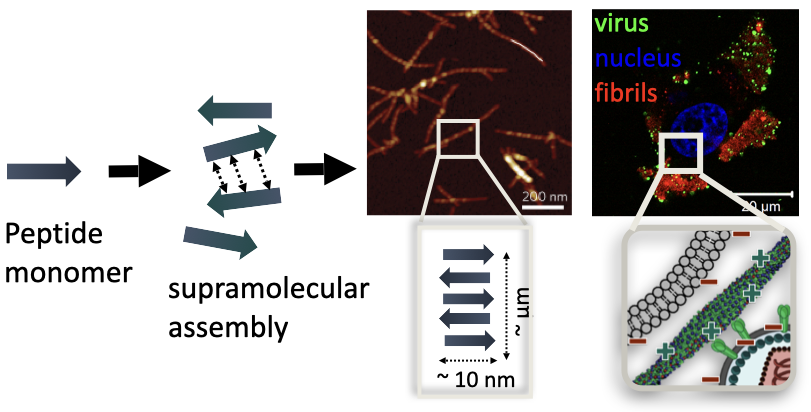
Recent advances in molecular medicine have greatly simplified the transfer of genetic material into cells for a myriad of applications, such as the development of mRNA vaccines and gene therapy. Gene therapy approaches can be used to treat diseases that are both inherited, such as those caused by gene defects, and acquired diseases, such as cancer. Among others, retroviral gene transfer is the most commonly used method of choice to introduce genetic material into cellular genome. However, the efficiency of retroviral gene transfer is still limited. For most applications, low concentrations of... Read More
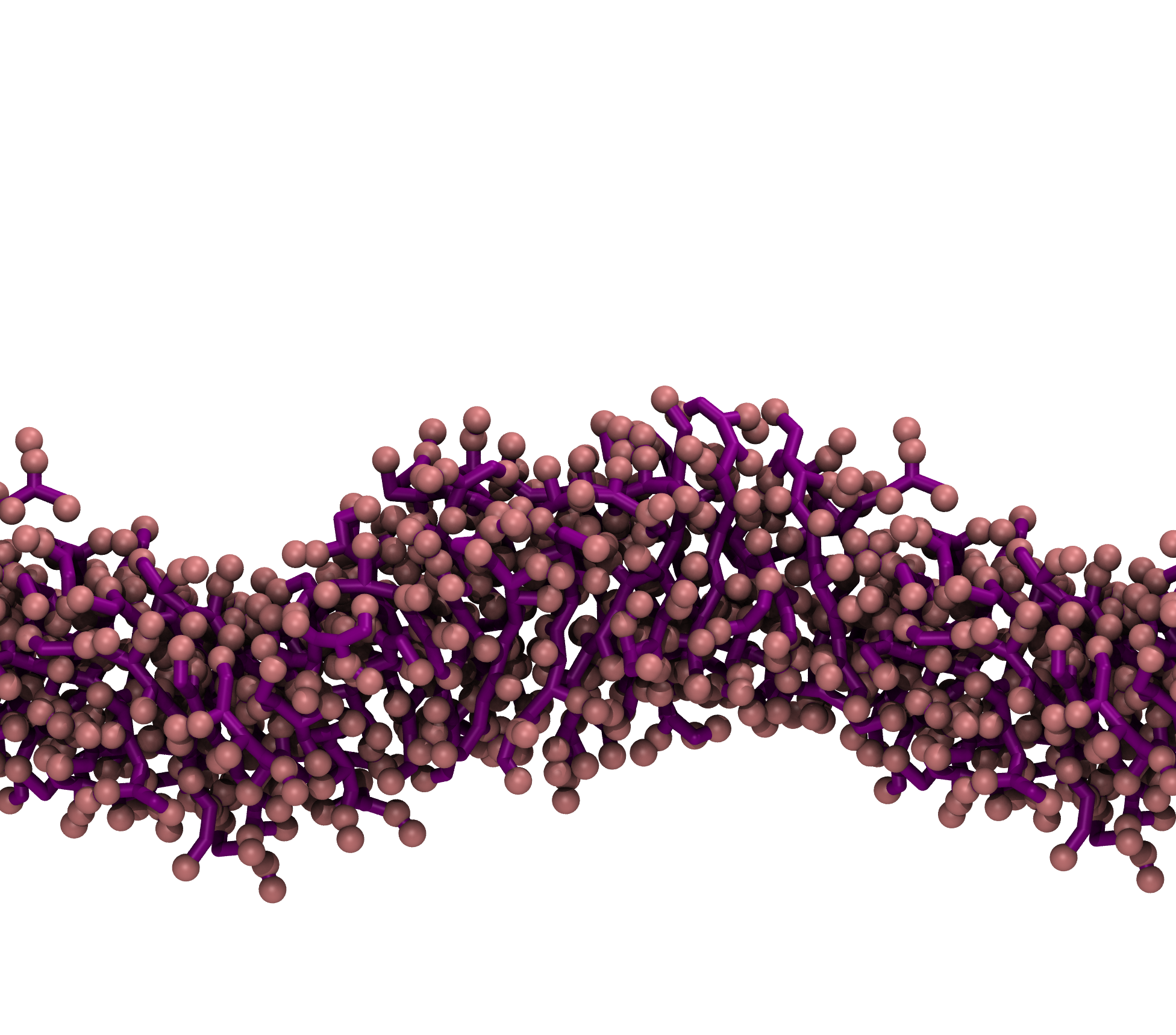
Apart from the physical models that are used to perform simulations, we also develop data-driven methods to gain information about self-assembly and amyloid formation of peptides in solution. Oftentimes, computer simulations, such as molecular dynamics, can produce vast amounts of data that is difficult to analyze. Especially with processes that are rare events (non-equilibrium) or that happen on short time scales, clustering and data dimensionality reduction methods have recently been proved to be useful for understanding the dynamics of a supramolecular polymers. Furthermore, while machine... Read More
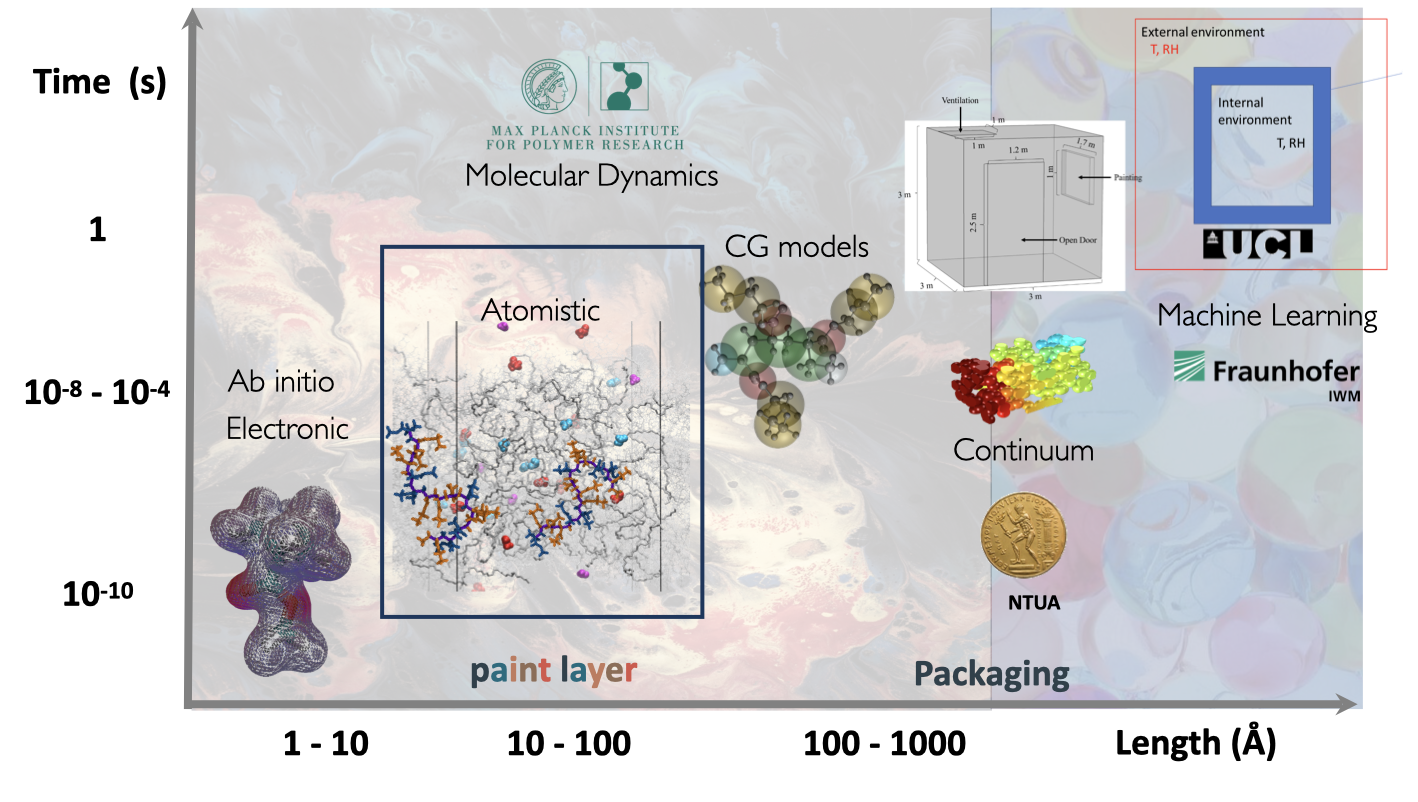
Acrylic paints have been widely used by artists since 1900s because of their many desirable properties over traditional oils, such as fast drying times, solubility in water and applicability to different surfaces. Although acrylic emulsion paints have long succeeded in market sales compared to other types of artists’ paints, what researchers know about acrylic paints relative to the current knowledge of oil paints in the field of conservation is limited. Therefore, there is a serious need of research to guide decisions made by conservators and scientists interested in developing better... Read More
A new way of engineering materials is to introduce components into materials that encode properties that are enabled in response to external factors or changing environmental conditions. This idea goes beyond the conventional thinking that materials have static properties that are realized once the material is manufactured. In contrast, “smart” materials design is aimed at finding ways to incorporate a built-in responsiveness that can be triggered with a broad range of stimulus, such as changes in pressure, temperature, light, pH, etc.Nanofibers synthesized from self-assembling... Read More
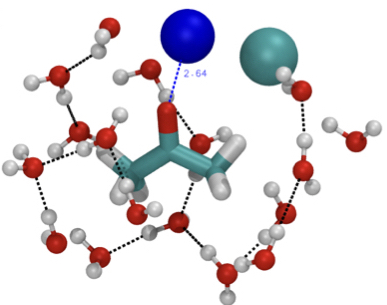
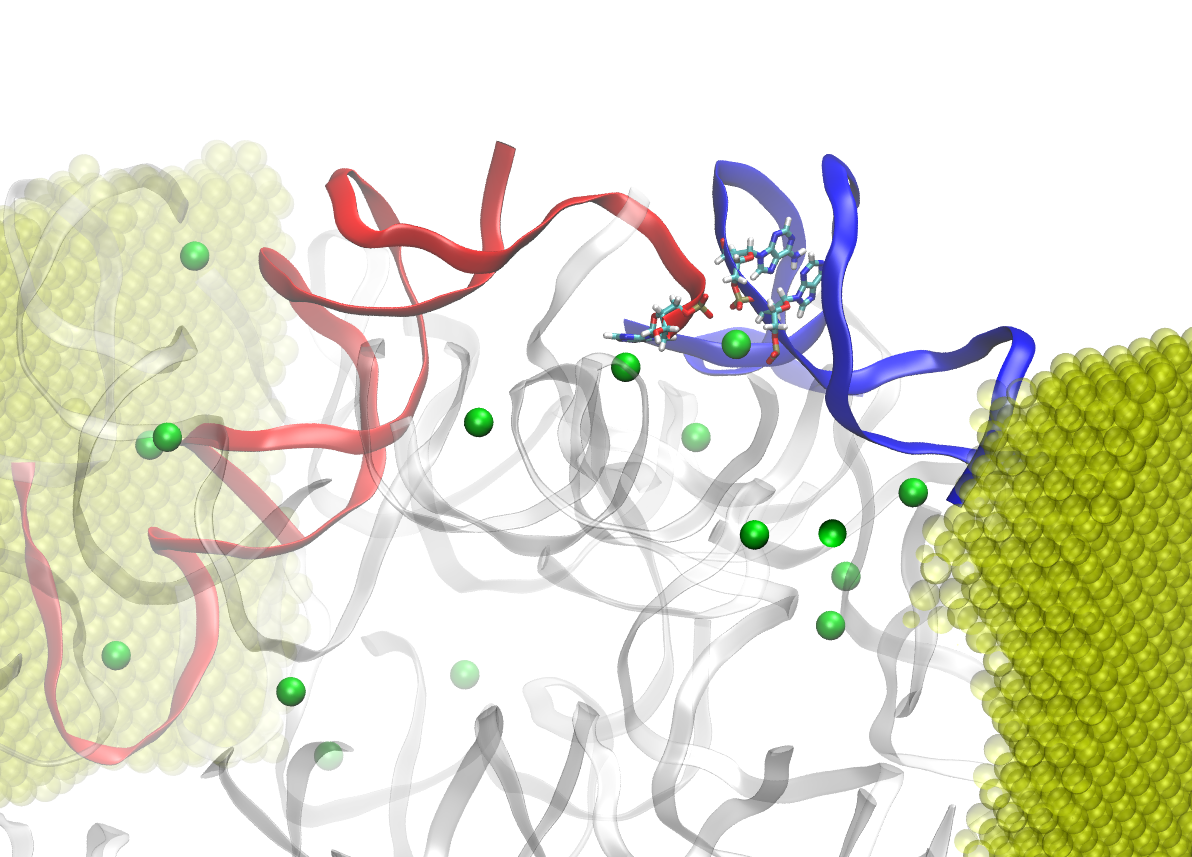
In electrochemical devices, the properties of the electrode-eletrolyte interface are important important for their function. One of the fundamental aspects of the electrode−electrolyte interface is the electric double layer, the structuring of the ions in the solution in the vicinity of a charged surface. In order to study the double year, a small molecule, which has a functional group that can be used as a vibrational proble, is tetherd to the electrolyte. By varying the length of the tether, this would allow a mapping of the properties of the double layer as a function of increasing... Read More
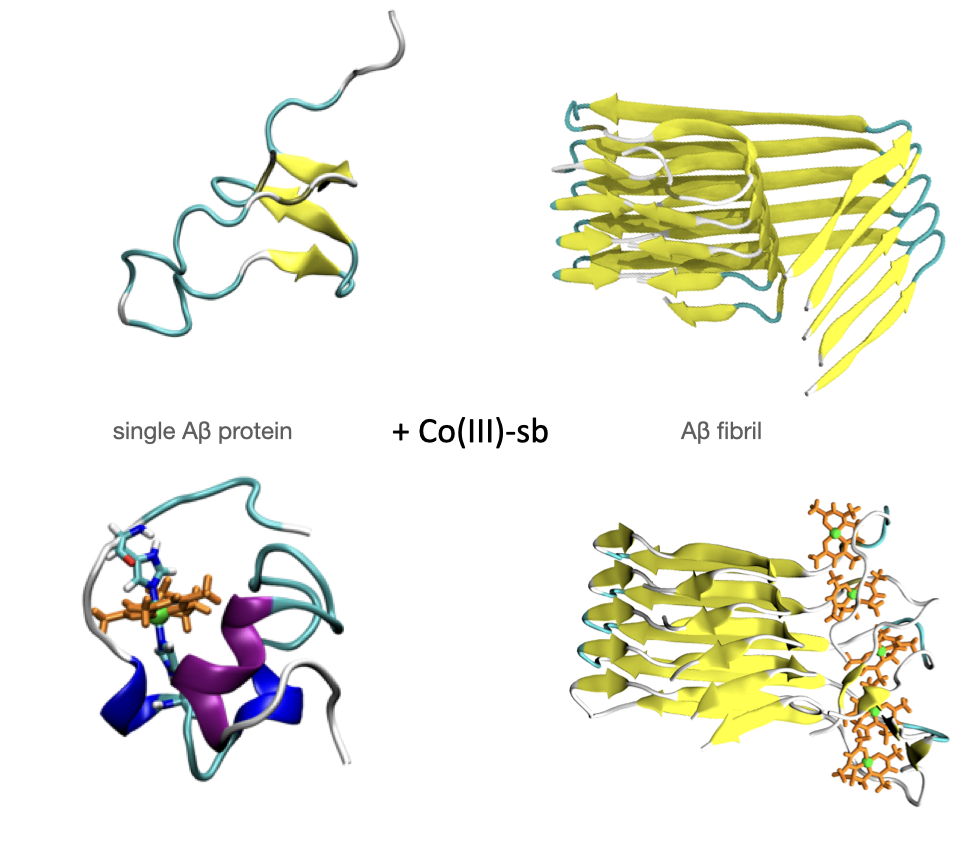
Similar to the self-assembly of peptide amphiphiles, aggregation of amyloid β into fibrils found in brains of Alzheimer’s patients results from the intramolecular and intermolecular hydrogen bonding interactions that lead to formation of β-sheet networks. Alzheimer’s disease (AD) is a progressive, neurodegenerative disorder associated with memory loss and cognitive decline. Pathologically AD is characterized by aggregation of the amyloid beta (Aβ) peptide into extracellular amyloid plaques and the formation of intracellular tau tangles. The aggregation of the soluble peptide Aβ... Read More